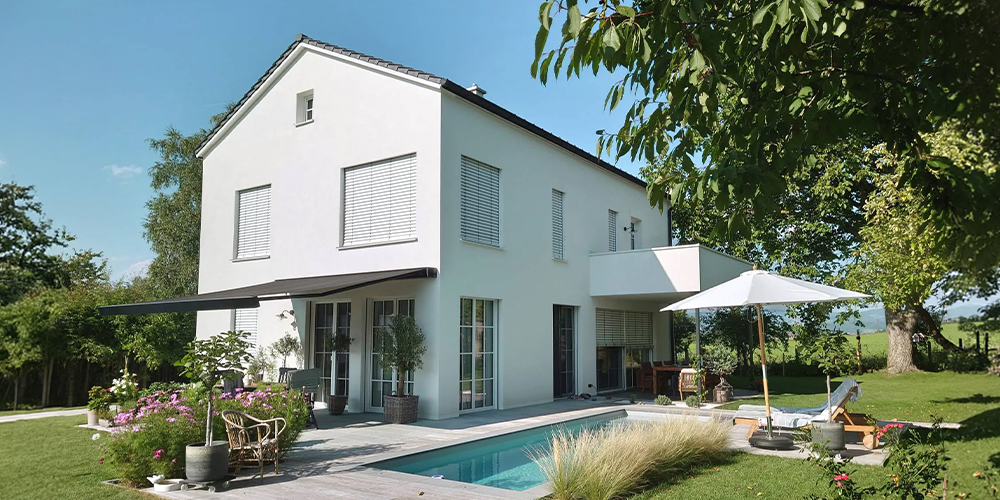
A smart home does not always have to be visible at first glance. In a newly built country-style home near Linz in Upper Austria, the owners deliberately chose not to install conspicuous operating elements such as touch panels or glass push-buttons. Instead, the project focused on discreet, almost invisible building automation based on KNX. The installation was carried out by Flux Technology GmbH, using the our Home Automation Server together with our YOUVI visualisation for central control.
Smart Home technology without visible controls
The homeowners had a very clear vision: modern building technology should provide comfort and functionality without visually compromising the traditional country-style architecture. As a result, only conventional switches were installed throughout the house, without any visible smart home components.
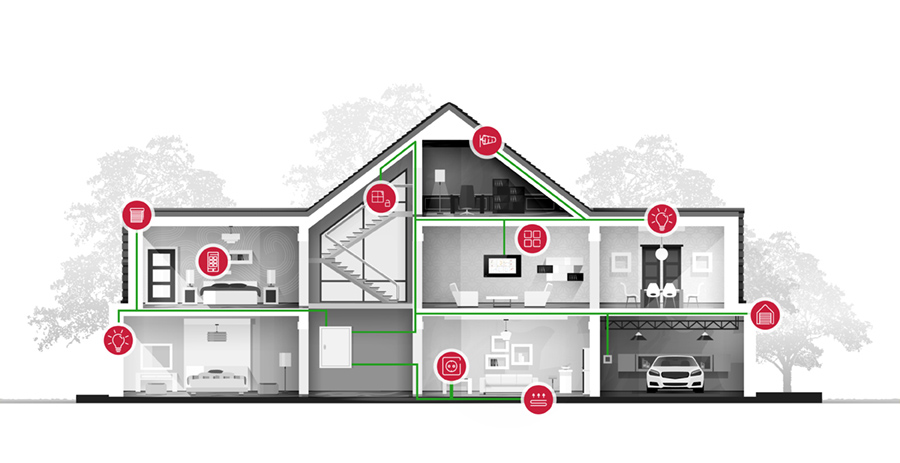
KNX operates entirely in the background. The installed push-buttons look and feel like classic light switches while actually communicating via the KNX bus.
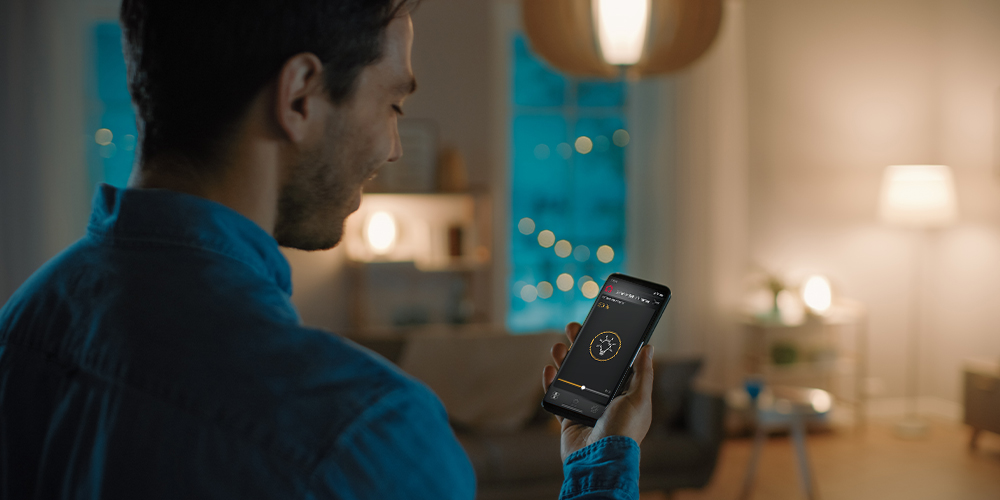
In addition to conventional wall switches, advanced control is provided via mobile devices. This preserves the familiar tactile experience of traditional switches while offering additional smart home functions conveniently through an app.
Central control with the Home Automation Server
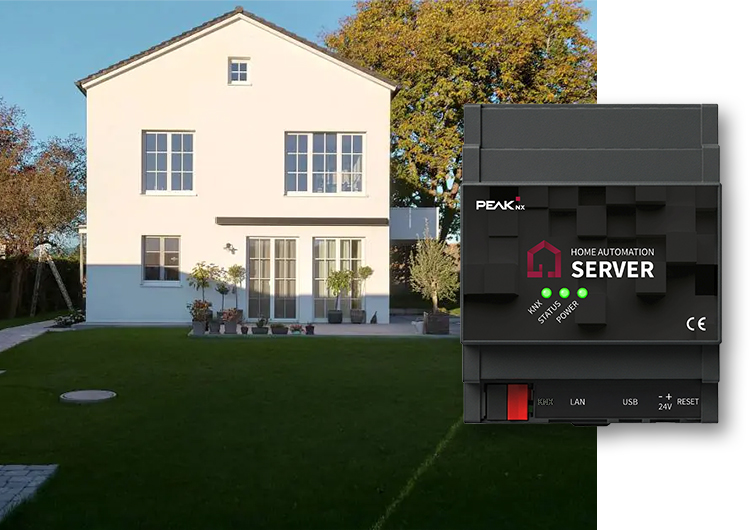
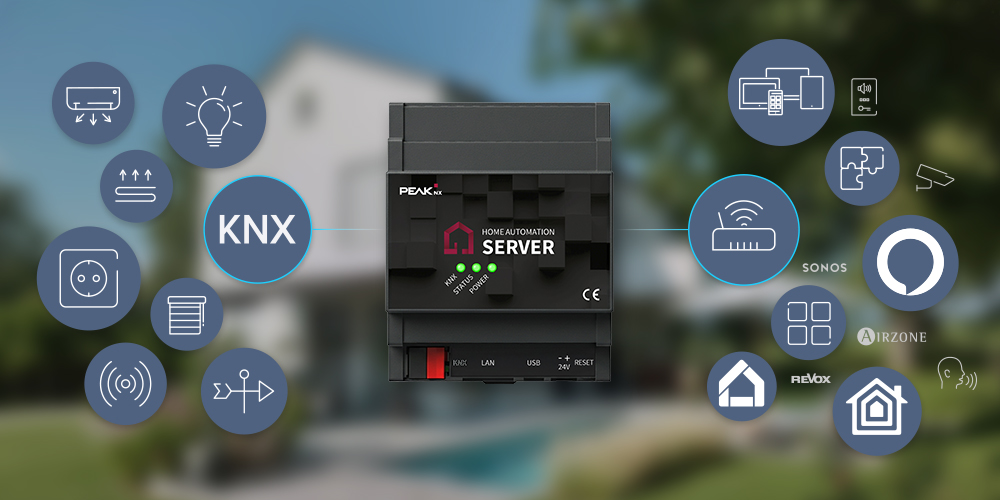
As the family deliberately chose not to install fixed touch panels, a server-based solution was selected. The intelligence of the smart home system is concentrated in our Home Automation Server, which occupies just four DIN modules and is centrally installed in the electrical cabinet. Mounted on a DIN rail to save space, it acts as the central control and visualisation platform. A KNX IP router and bus monitor are already integrated, eliminating the neeThe integrated YOUVI software package handles both visualisation and automation tasks. The server is Linux-based and designed specifically for reliable long-term operation inside the electrical cabinet.
The Home Automation Server enables
- the integration of all KNX components
- flexible use of different operating devices such as smartphones, tablets and PCs
- visualisation on mobile devices
- implementation of customised logics and automations.
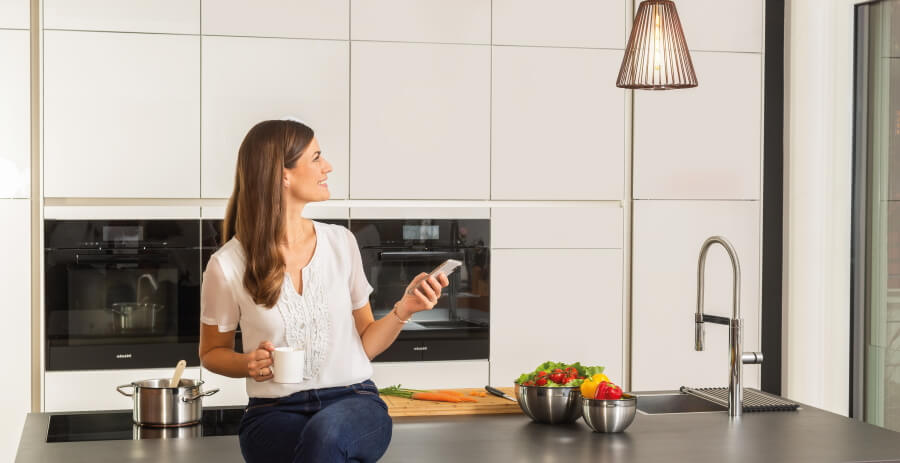
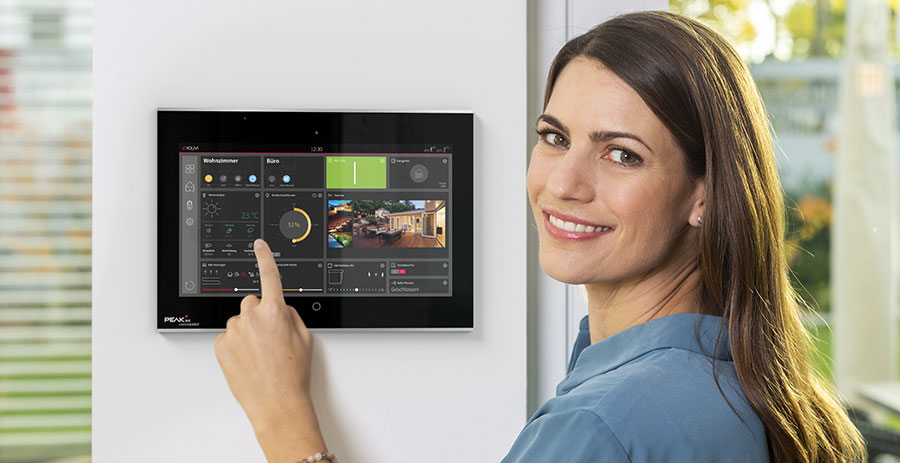
This approach offers maximum flexibility, especially for projects without permanently installed operating units such as touch panels. Control is handled entirely via mobile devices, while the technology itself remains invisible in the background.
YOUVI: intuitive app-based control
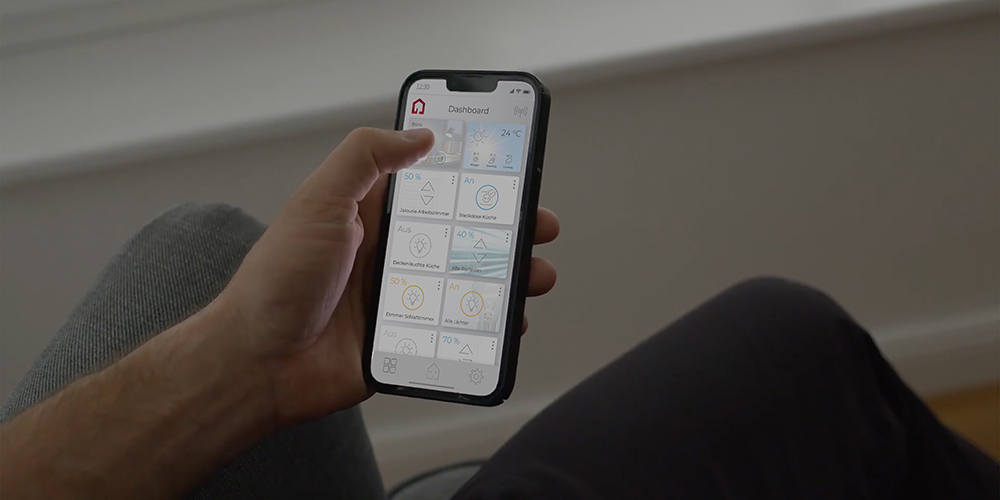
The entire system is controlled via the YOUVI app on smartphones and tablets. Interestingly, the homeowners only decided to implement a visualisation solution during the course of the project after experiencing YOUVI live during a customer demonstration at the system integrator’s showroom.
Today, they use the app to centrally control:
- lighting
- shading (blinds)
- scenes and routines
The intuitive YOUVI interface allows users to customise and expand the visualisation without requiring extensive programming knowledge.
Customised automations and routines
The integrated YOUVI Logic module proved to be one of the key advantages of the chosen solution, enabling flexible creation and adjustment of automations.
The following functions, among others, were implemented:
- time-controlled lowering of blinds in selected rooms
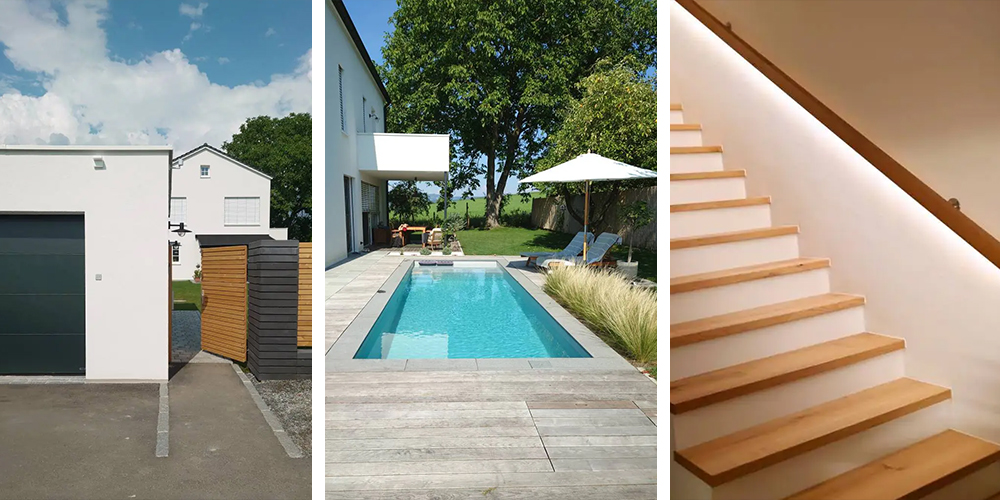
- automated awning control
- garage door control
- scene-based automations for different everyday situations
- indoor and outdoor lighting control depending on time of day and brightness levels
- individually configured “TV scene”: activating the television automatically adjusts lighting and shading while simultaneously activating the entertainment system.
One major advantage is that many of these adjustments can be carried out by the homeowners themselves. Changes such as schedules or simple automations can be configured directly within the visualisation without requiring support from the system integrator.
This significantly reduces maintenance effort while giving residents greater flexibility in daily use.
Even later adjustments, such as time-based lighting control or customised routines, can easily be implemented.
A smart home that evolves step by step
Rather than implementing the entire project at once, the system was deliberately expanded step by step following the planning phase that began in August 2021. In 2023, the focus was initially placed on lighting and shading, followed later by visualisation and routines. In 2024, the outdoor awning was also integrated into the system.
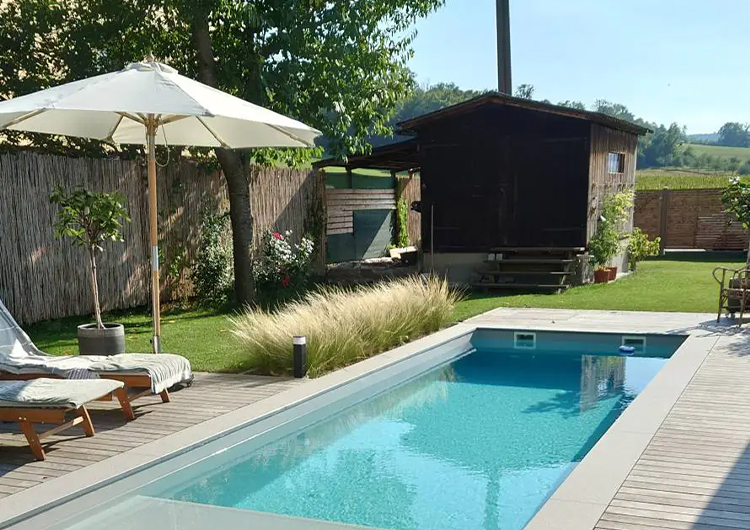
The next expansion stage is already underway: integrating a swimming pool, including control of filtration and cleaning processes as well as the pool drainage valve. Future plans also include integrating garden irrigation, the robotic lawn mower and the photovoltaic system into the smart home system.
This approach demonstrates a major advantage of KNX in combination with the Home Automation Server: the system remains fully scalable and can continuously evolve alongside the homeowners’ requirements.
KNX chosen deliberately for openness and flexibility
In addition to aesthetic considerations, the choice of system itself also played a central role. The family consciously decided against proprietary all-in-one solutions and opted for the open KNX standard instead.
Decisive factors included:
- freedom to combine products from different manufacturers
- flexible scalability
- long-term investment security
This ensures that the system remains flexible and independent of individual manufacturers or proprietary platforms in the long term. Compared to closed systems, KNX makes it possible to combine components from different manufacturers and customise the system individually.
Collaboration with Flux
The project was implemented by Austrian system integrator Flux Technology GmbH, which supported the project from the very beginning. Close coordination between integrator, manufacturer and homeowners proved to be a decisive factor in the project’s success.
According to the integrator, the solution stands out particularly because of
- the reliable collaboration with PEAKnx
- continuous software development
- practical and responsive support
The fact that the homeowners themselves can carry out adjustments has also become a major advantage in everyday use.
Conclusion: discreet intelligence with maximum flexibility
This KNX project in Upper Austria highlights how modern building automation can blend seamlessly into a traditional living concept – without visible technology, yet with a high level of comfort.
Using our Home Automation Server together with our YOUVI visualisation, the result is a solution that
- operates completely invisibly in the background,
- offers intuitive app-based control and
- remains flexibly expandable at any time.
The strengths of this server-based solution become particularly clear in projects where visible operating elements are deliberately avoided.
Combined with the open KNX standard, this creates a future-proof smart home solution that impresses both technically and aesthetically.
Are you also interested in discreet, virtually invisible building automation based on KNX? Our Home Automation Server makes it possible.